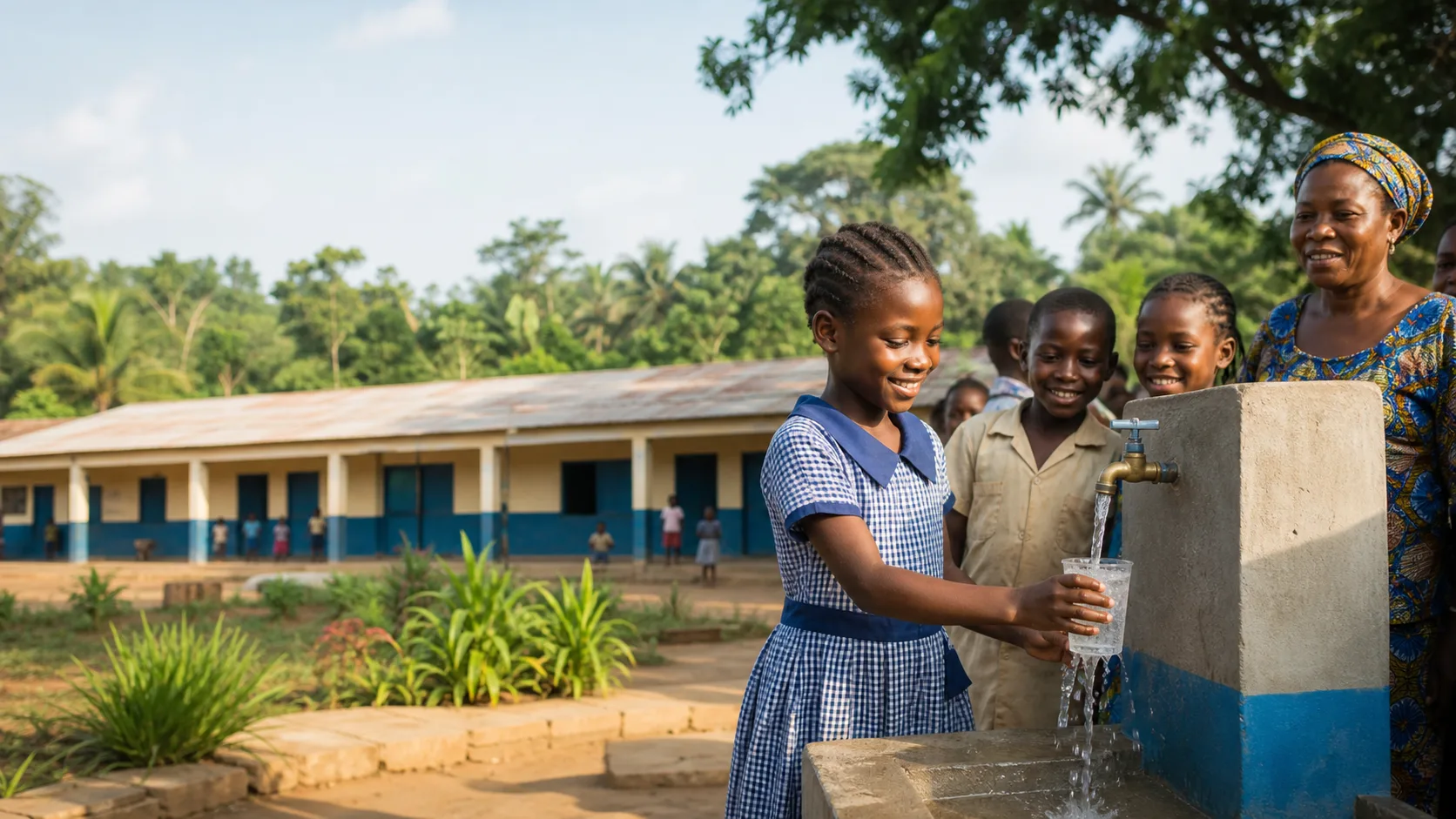
When the water first ran clear, the whole of Bafia seemed to exhale at once. Children pressed their hands under the new tap; elders filled jerrycans they had carried, empty, for years. For a community that had walked more than four kilometres to the nearest stream, the new protected water point is more than infrastructure — it is time, health and dignity returned.
A village that walked for water
Before this year, most households in Bafia relied on a seasonal stream shared with livestock. During the dry months, families queued before dawn; during the rains, the water ran brown. Waterborne illness was a constant, and it was the women and girls — the ones who fetched the water — who carried the cost in lost school days and long, unsafe walks.
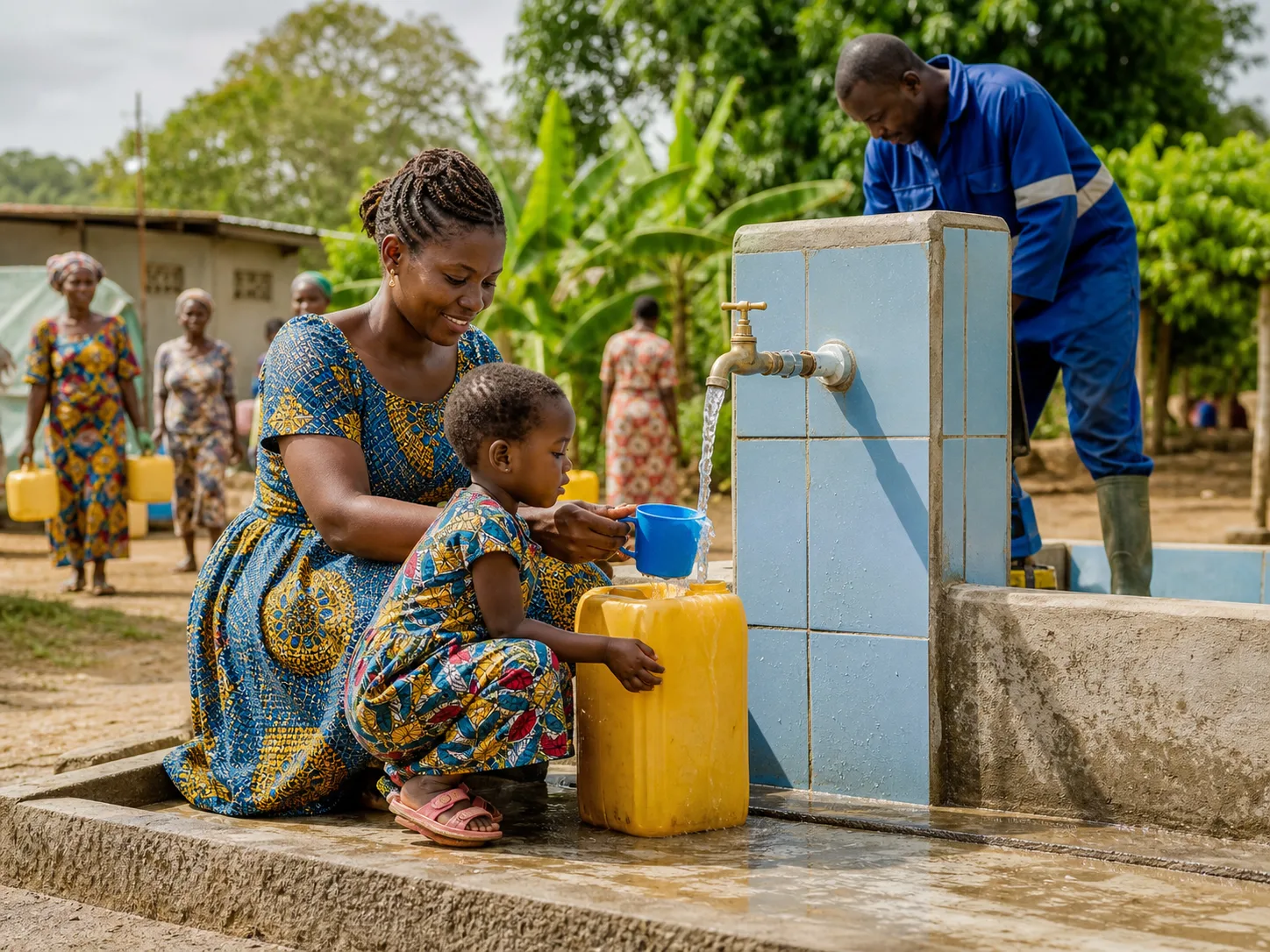
“I used to leave before the sun. Now my daughter drinks clean water at home and still makes it to class on time.” — Marthe, Bafia resident
Eight months from survey to first flow
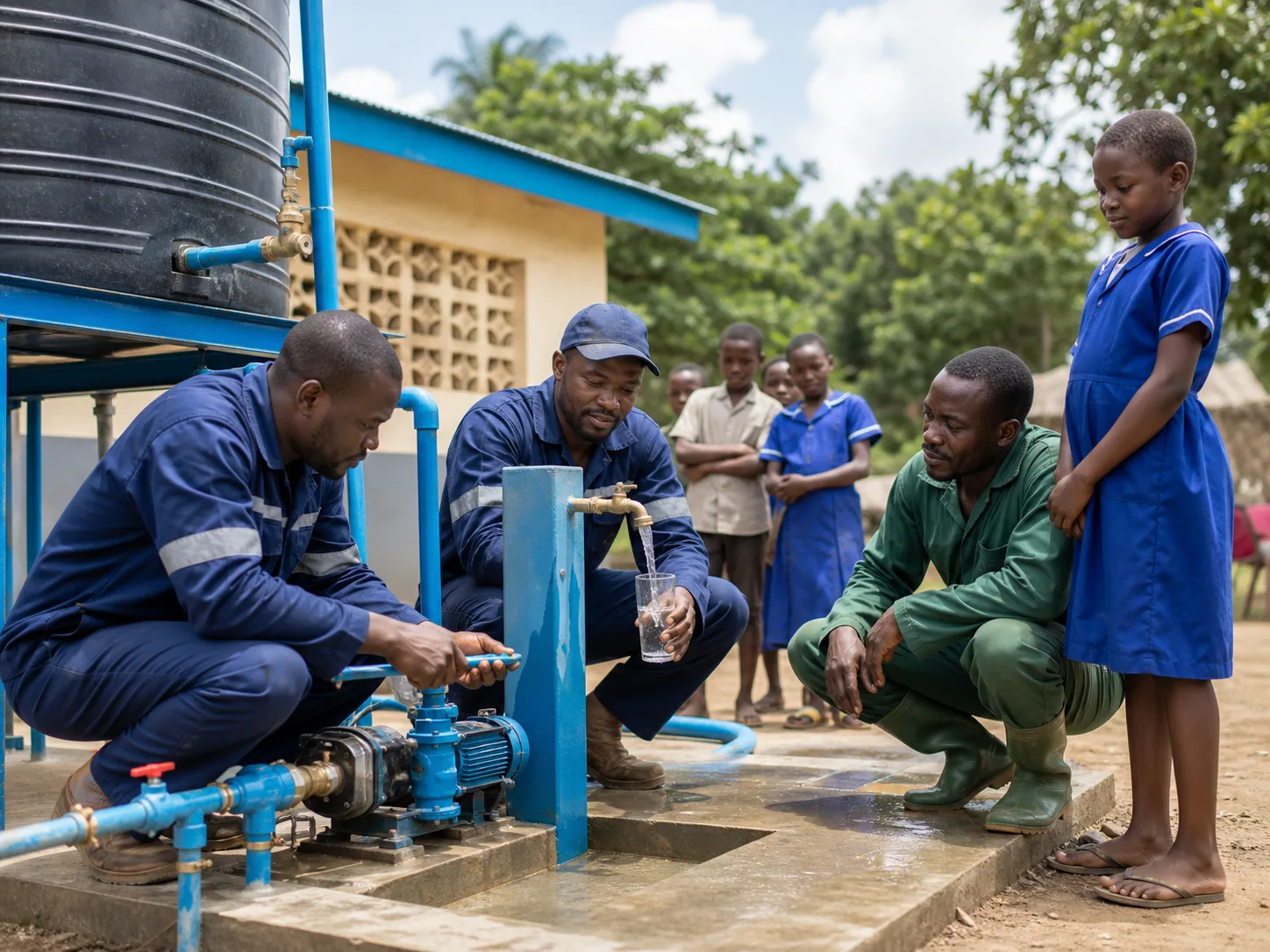
The project followed our standard four-step approach. A hydrogeological survey located a reliable aquifer; a borehole was drilled and capped; a multi-stage filtration and chlorination unit was installed; and a local water committee was trained to operate and maintain the system.
Crucially, the tap stand was not handed over and forgotten. Five residents — three of them women — were trained as caretakers, and a small, transparent tariff now funds spare parts and repairs. That is what keeps a water point running long after the ribbon is cut.
What 1,200 people gained
- A protected source delivering safe water within a five-minute walk
- A trained local committee with the tools and budget to maintain it
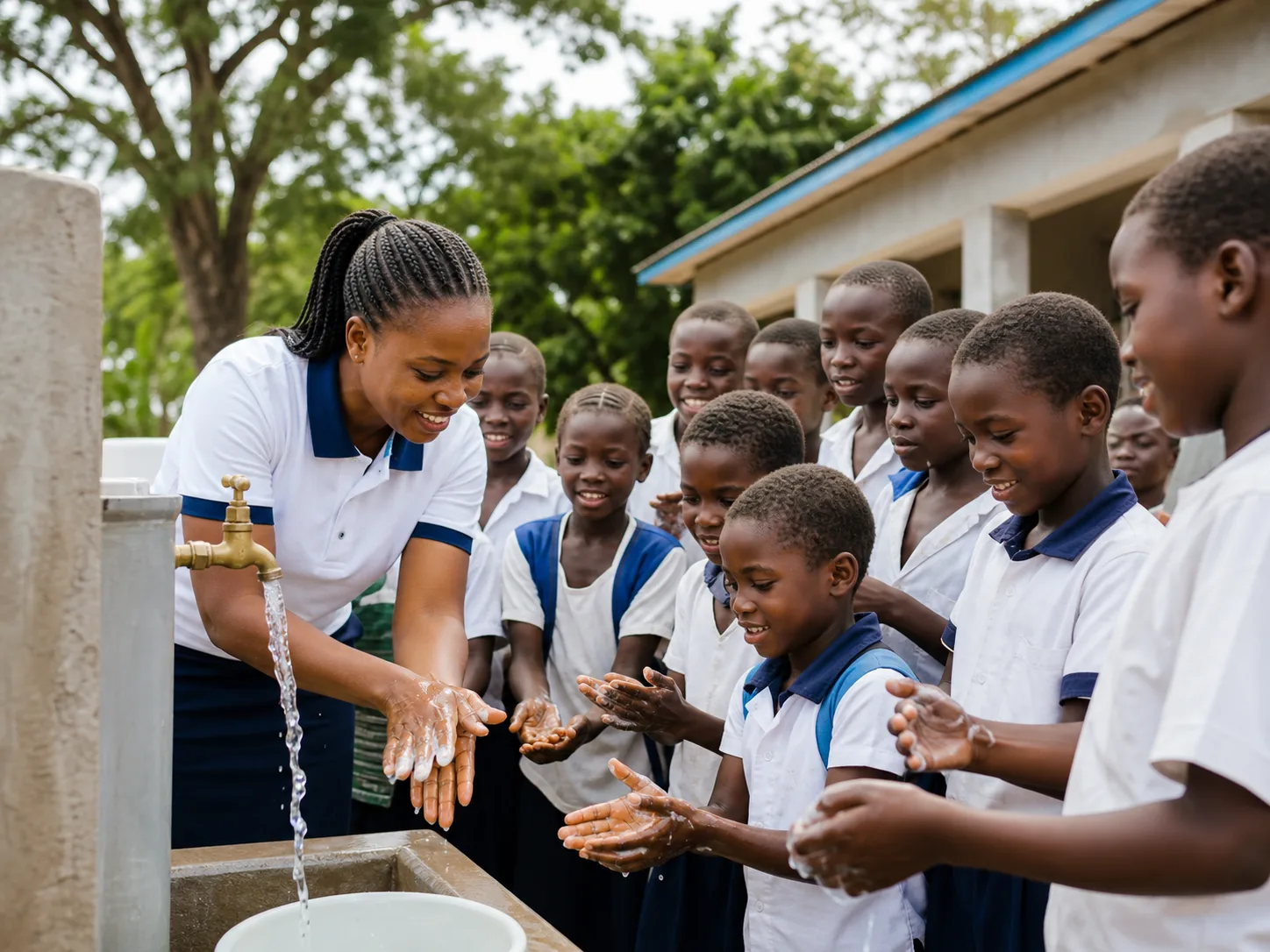
- Hygiene sessions reaching the village school and health post
The Bafia water point is the kind of lasting change your support makes possible — not a one-day event, but a system built to keep flowing.
By Amina Njoya